




























 BBC handout
Failing to properly diagnose and treat people with bipolar disorder is wasting billions of pounds a year in the UK, according to new data shared exclusively with the BBC. Experts say many of the estimated million people living with this condition are “ghosts in the system”, whose lives are being torn apart by poorly managed extreme suicidal lows or manic, erratic highs.
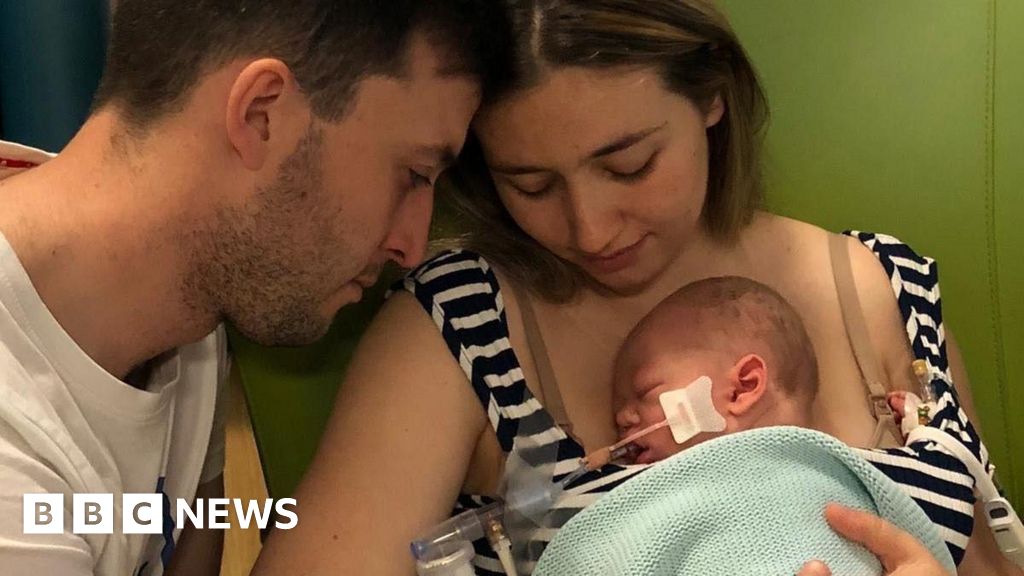
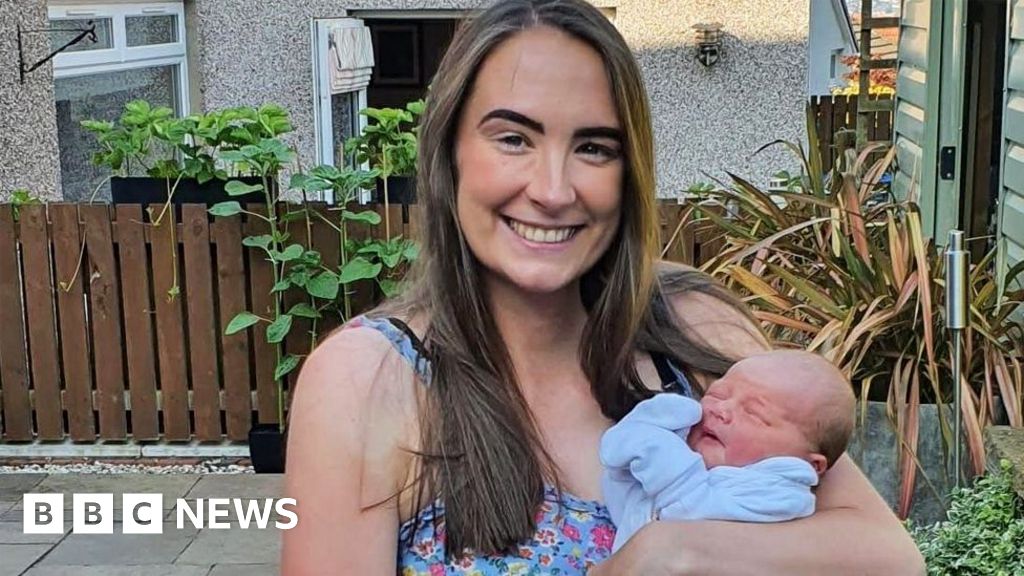
Emma was diagnosed with bipolar disorder in her early 30s, after experiencing a mental health crisis.
When she was 32 weeks pregnant, her grandmother died unexpectedly, sending her into a “deep low”. “I felt awful, but the perinatal team wouldn’t take me on,” she says. “They said my symptoms weren’t that serious.”
When Emma gave birth, the extreme lows of her pregnancy were replaced by an unexpected high. She felt amazing in the days after her baby was born – but she didn’t sleep and her behaviour became increasingly erratic.
A few weeks later, her mood flipped again. When her baby was three weeks old, Emma took an overdose.
It took a week in hospital for her liver function to return. But even after that, she was in and out of hospital for a year before finally being diagnosed with bipolar disorder, and medicated correctly.
“If I had the correct care, and been listened to during my pregnancy or even earlier, I could have avoided taking that overdose – 100%,” she says.
It wasn’t Emma’s first experience of poor mental health – she’d spent her teens seeing doctors and receiving different antidepressants. No one had ever suggested she might have bipolar disorder.


Experts have told the BBC how most people living with bipolar disorder in the UK are “undertreated, undiagnosed and left to try and survive in a system that has failed them”.
The majority who, like Emma, are eventually diagnosed with bipolar disorder, are incorrectly prescribed antidepressants initially, which may make their symptoms worse rather than better. Experts also say there is a lack of continuity of care from GPs through to psychiatrists.
Their warning comes as data exclusively shared with the BBC suggests the cost of the condition in the UK is now an estimated £9.6bn a year. That equates to more than £300 per taxpayer.
This breakdown includes NHS costs, such as GP services, psychiatrist appointments and visits to A&E and hospital admissions. It also includes economic costs, such as lost days at work and the need for family and friends to take time off to provide informal care.
But it does not include welfare payments for those out of work, or costs for police services dealing with people in crisis.
‘Common, complex and costly’
“This nearly £10bn figure is actually quite conservative,” says Prof Judit Simon, from the Medical University of Vienna, who worked with the BBC to generate the number.
“If this is a government that really wants to try and bring down the welfare bill, then bipolar disorder should be its absolute priority, the target disorder to actually move the dial.”
The data suggests up to 372,000 people with bipolar disorder are currently out of work, with some claiming benefits in the UK.
For a treatable disease, this number could be slashed if the correct care was on offer, say experts.
Prof Guy Goodwin, emeritus professor of psychiatry at University of Oxford, says: “If you want to cut the costs of a disease, you need to reduce hospital admissions and emergency care. If you don’t focus on cutting hospital admissions then you waste money.”
According to the Royal College of Psychiatrists (RCPsych), bipolar disorder is a manageable condition.
Dr Trudi Seneviratne, registrar at the RCPsych and a commissioner on the Bipolar Commission, says it is “completely treatable” with a combination of medication, talking therapies and lifestyle factors.
“But there are many, many people who are suffering in silence with lower levels of symptoms because there isn’t a good clinical care pathway for them in the UK.”
She says if care for bipolar disorder was fit for purpose, it would cut “the cost to society” as well as reducing “the human suffering this disease unnecessarily causes”.
It is this sense of waste – with people who could be leading a good life but aren’t – that angers experts most, who say it is a neglected diagnosis.
Prof Allan Young, from Imperial College, says: “Bipolar is common, complex and costly – but it is so often unrecognised.
“People know it is there but somehow people are just not being cared for correctly.”

This lack of correct care is what Rosie says resulted in her being arrested at Stansted Airport for jumping the security barriers during a manic episode in her early 20s.
“I was utterly delusional,” she says. Following her arrest, Rosie was taken to A&E and locked in a room. She waited there for more than 12 hours while a bed at a specialist mental health unit was found.
Like Emma, Rosie had been dealing with mental health issues since childhood, but it was only after being in crisis that her condition was recognised. This particular period of psychotic mania had been triggered by a relationship breakdown.
She was sectioned and hospitalised for three months, after which she finally began finding a combination of medications that worked for her.
Now 29, Rosie says she still has high and low periods, but adds that she is far more stable and is able to work part time.
“I was failed,” she says. “I’m told my symptoms were a textbook case for bipolar lows and highs – energetic, grandiose language, erratic – but no one even considered this diagnosis for me until I was sectioned.”
Costs could be halved
The Maudsley Hospital, in South London, has an intensive specialist care programme for its sickest, most regularly relapsing bipolar patients. The service aims to try and stop patients hitting crisis point.
Similar to services offered in other European nations, the hospital provides group sessions for patients and their families. The classes help patients to understand when an episode might be starting and then contact the service once they spot early warning signs.
They can then attend an outpatient clinic and adjust medications. The relatively cheap programme has seen re-admission rates to hospital fall by 80% as intervention takes place before a crisis.
Prof Young says costs associated with bipolar disorder could be halved with more specialist care programmes.
“Undoubtedly, specialist treatment could contribute to getting lots of people back into work. And we know that work is very good for helping people recover from episodes of mental ill health.”
However, many experts say patients still face a postcode lottery about whether they can see a psychiatrist at all.
Carolyn Chew-Graham, a GP and professor of general practice research at Keele University, says those who are acutely unwell will be picked up quickly by crisis teams but those with “less florid manic episodes” can miss out on referral to specialists for diagnosis.
“There’s a high threshold of referral,” Prof Chew Graham says. “People really have to be quite unwell before they are seen in specialist services”. She says GPs may be reluctant to refer patients – even if they strongly suspect they have bipolar disorder – for fear they will be rejected.
“GPs may think I won’t even consider bipolar because if I mention it to the patient and then I can’t get them seen, I am a bit stuck”.
Prof Young says bipolar patients need long-term specialist care.
“But that’s the frustration here – even though there is strong evidence that specialist care improves the outcomes for the patient, and costs the state less, there are still so few bipolar specialist facilities.
“It’s a tragedy.”
An NHS spokesperson said bipolar disorder could often take time to diagnose because it affected everyone differently and the symptoms were similar to other mental health conditions.
“NHS staff are working incredibly hard to get people diagnosed and reduce waiting times for care.
“Staff are treating a million more people than they were six years ago and are working to transform services alongside this demand – this includes strengthening community services, trialling new 24/7 open access mental health centres and rolling out mental health crisis lines.”
The Department of Health and Social Care says it has already announced £26 million to open new mental health crisis centres and it will recruit 8,500 mental health workers to cut waiting times and provide faster treatment.
If anything in this article makes you concerned please consult your GP.
If you’ve been affected by the issues in this story, help and support is available via BBC Action Line.