



The Atkinsons stayed in touch with George’s adoptive family for a while, but Tony and Elsie knew they couldn’t keep visiting because George needed to bond with his new parents, so when contact gradually dwindled it felt natural – Tony and Elsie assumed everything was still going well.
But 20 months after George had left them to live with his “forever family” there was unexpected news.
“We got a phone call saying, ‘Do you remember that little boy? You’re the only people in the world that he has any connection with. Could you take him back?’ The adoption had broken down,” Tony says.
“Adoptions sometimes break down in the first two or three months – but for an adoption to break down after that length of time is quite unusual.”
By now George was almost seven, and Tony and Elsie knew that if they took him back it wasn’t going to be easy.
“Because we were going to get a very angry, very troubled little kid back,” Tony says.
After much consideration the Atkinsons decided that they would foster George again. On the day that he returned he ran up to his old bedroom and put his things everywhere, and then placed his small collection of DVDs next to the TV in the living room. He slotted back in pretty well, but Tony and Elsie worried about how the breakdown of his adoption was going to affect him.
“That sense of ‘my birth parents didn’t love me enough to keep me, you as foster carers didn’t keep me, then my adopted family rejected me – I am unlovable, and so I will push everybody away to prove that,'” Tony says. “Many kids in care have a similar attitude.”
About two years passed and although having George back hadn’t been entirely plain sailing, things were going pretty well. Then one day Tony realised that George had been “ominously quiet” and went to see what he was doing.
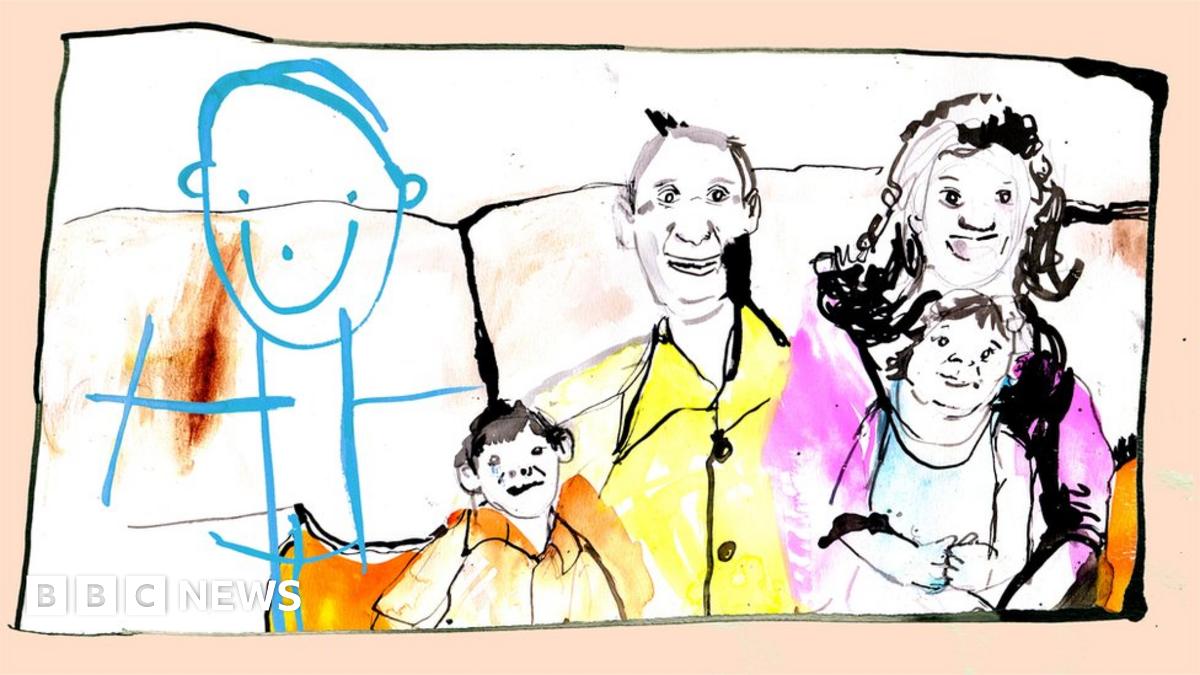
He found George sitting on the living room floor surrounded by shards of broken glass. A framed photo of Tony and Elsie and their two birth children, taken years previously – long before George had arrived in their lives – lay in pieces. George had broken the frame and prised it apart. He’d taken the photo out and, with a marker pen, drawn a stick figure of a small child with the most enormous smile – himself – standing behind Nancy and next to Elsie.
“It makes me really emotional even now to think about it,” says Tony, who now regards this picture as a family treasure – the thing he’d want to save if their home was burning down.
“George wasn’t necessarily the most articulate kid in the world, but it was obvious that this was his way of communicating something that was quite hard for him. To say, ‘I want to be in your family,’ is a massively vulnerable thing to do when you’re eight and you haven’t got any other options. You’re really putting your heart out there.”
Tony told George what a lovely picture he’d made and asked if he’d like to become an Atkinson.
“He just nodded,” Tony says. “He’s circumspect with his emotions because he’s been hurt so many times, and by now he knows adoptions don’t necessarily last forever, they’re not necessarily happy endings.”