



























Angharad Thomasand
Gareth Bryer,BBC Wales
 BBC
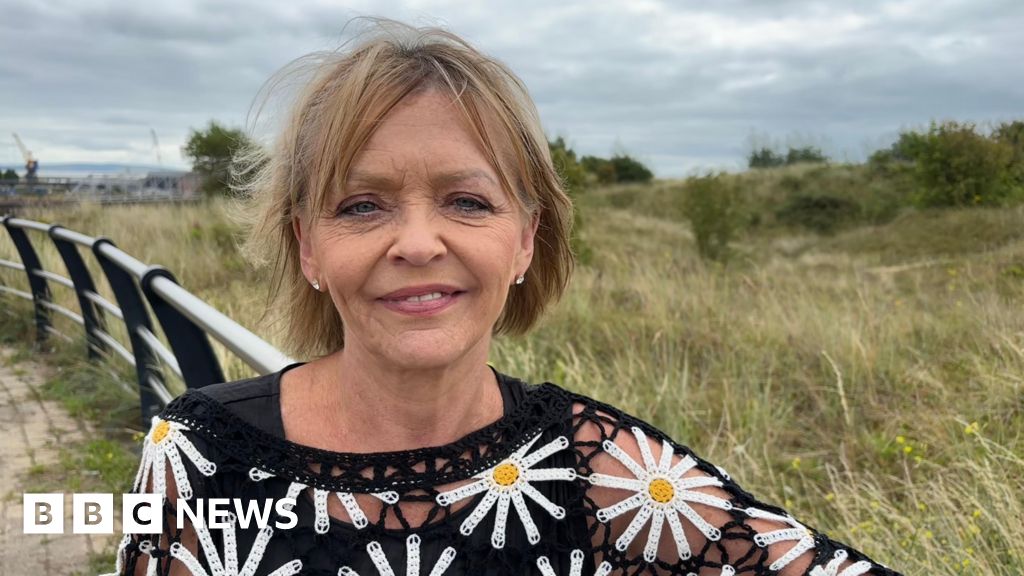
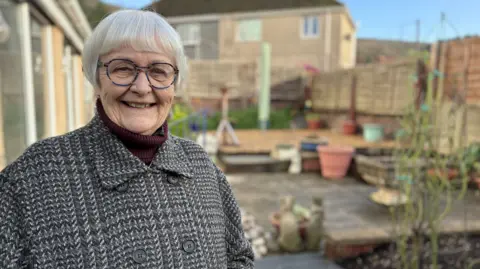
BBC“It was in my house, it was out all over my furniture and all my windows outside, I had to wash down nearly every day. It was just dreadful.”
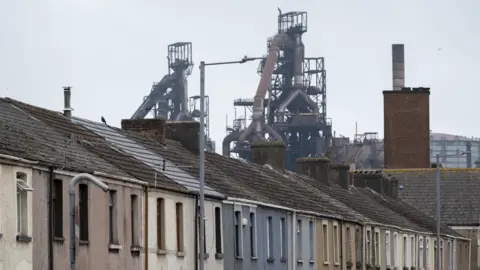
Gail Sydenham, 78, is one of the thousands of people who have lived most or all of their lives in the imposing shadow of the UK’s largest steelworks in Port Talbot.
Just over a year since the blast furnaces shut down for the final time, air pollution has plummeted in the once dust-covered town, according to data analysed by the BBC.
But some locals have said that the thousands of jobs that were lost in the move away from the coal-burning furnaces outweigh any benefit in pollution levels.
Gail said the steelworks employed people in her family for decades – even earning her more money than her father at one point – but it came at a cost.
“The pollution was dreadful,” she recalled.
“Worse under Tata’s reign than it was under British Steel or even Corus.
“I can’t tell you how many sets of garden furniture I’ve gone through. Now, a quick wipe does it.”

 Athena Picture Agency
The retiree and once-apprentice chef at the steelworks gave up smoking more than 20 years ago and claimed the high levels of pollution played “an enormous part” in her declining health.
Gail has had health issues including Chronic Obstructive Pulmonary Disease (COPD) for the past 40 years – but felt her health has been “much better” since the closure.
She claimed people could “actually see the particles” of dust inside and outside of their homes – and had about 1cm (0.4in) of dust covering her attic.
 Getty Images
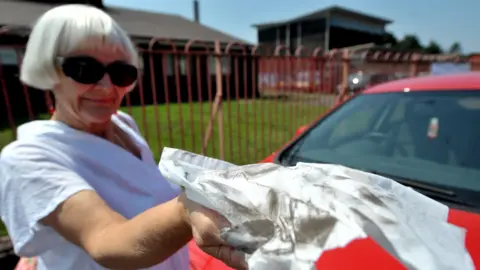
Gail said she was also paid a couple of times by Tata due to the dust and received £500 in her last payment.
Some neighbours even had their cars cleaned by the company as a goodwill gesture.
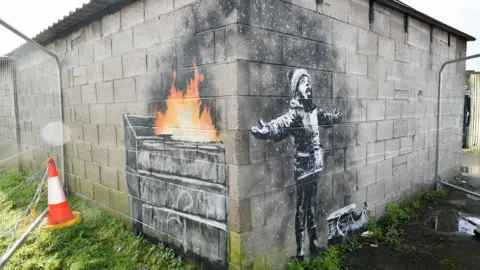
The issue was thrust into the limelight in 2018 by the street artist Banksy when he created a piece of art on the side of a garage near the steelworks depicting ash from a fire falling on a child like snow.
Tata said its priority has been to reduce the environmental footprint of its operations through its move to an electric arc furnace, which melts mostly scrap steel, rather than making new steel from iron ore.
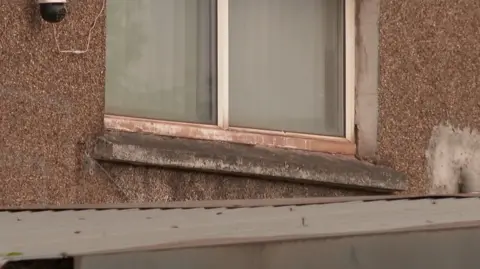
Working with an academic specialising in air pollution, the BBC analysed 10 years’ worth of data from a monitor close to Tata Steel, next to houses near the site.
Of the four types of pollution we looked at, the two most closely linked to the industrial processes at Tata were sulphur dioxide (S02) and coarse particulate matter (PM10) – material that is a fifth of the thickness of hair and can be inhaled deep into the lungs.
In the year following the closure of the second blast furnace, levels of both these pollutants fell significantly.
Despite this closure, the town still also suffers pollution from the M4 cutting through it, with a 50mph zone introduced to try and combat the problem.
Between October 2024 and September 2025, SO2 levels were 71% lower than the previous five-year average, when it was nowhere near the World Health Organization (WHO) guideline levels.
In the year following the blast furnace closure, PM10 levels fell by a third, with only one day exceeding WHO guidelines, compared to an average of 31 days a year in the five years prior.
PM10, which is also associated with industrial activities and can exacerbate respiratory illnesses such as asthma, were 35% lower in the post-steelworks period.
Dr Omar Nawaz, an expert in climate change at Cardiff University, explained that the hills around the steelworks “act as a natural barrier to trap air pollution” and keep it “contained within that type of basin”.
Prof Gwyneth Davies, who leads the asthma service for Swansea Bay health board, said in some deprived areas such as Port Talbot, people were “exposed to particularly high levels of pollutants”.
Prof Davies said, with pollutants now reduced, she expected to see “less asthma attacks and less attacks of other airways disease like COPD”.
Despite feeling the benefits to her health since the closure, Gail said the loss of coal-burning furnaces had been a huge financial hit to the community.
She said many people who lost their jobs were now in roles that aren’t “paying the money they were paying there”.
Tata said its electric arc furnace – set to be operational by the end of 2027 – would secure 5,000 jobs in the steel industry.
The Welsh government also said it had committed £25m in 2024-25 to train ex-Tata workers and get them into new jobs.
 PA Media
Former steelworker Ray Barnes, 70, has lived near the steelworks for 46 years and said it “was everybody’s livelihood”.
Although he didn’t think much of the health implications when he first joined at 20 years old, he vividly remembered “coughing up black dust” and “black coming out” of him when he was in a sauna.
Paul Cardy, 57, also a retired steelworker, said that while he had no health problems, he used to occasionally get a dry throat but his priority was getting paid and supporting his family, rather than worrying about his health.
He said while the “damage is done” for him, the next generation have a healthier future.
Joseph Carter, head of Asthma + Lung UK Cymru, said air pollution contributes to about 2,000 deaths each year in Wales and cost £1bn in terms of lost workdays and costs to the NHS.
Tata Steel said its new electric arc furnace would reduce its environmental impact massively, adding: “This transition strengthens domestic supply chains and reduces reliance on steel imports from countries with higher carbon intensity, delivering a net environmental benefit rather than offshoring impact.”