


























News
  • Login
  • Home
  • News
  • Sport
  • Worklife
  • Travel
  • Reel
  • Future
  • More
Thursday, March 19, 2026
No Result
View All Result

NEWS

3 °c
London
8 ° Wed
9 ° Thu
11 ° Fri
13 ° Sat
  • Home
  • Video
  • World
    • All
    • Africa
    • Asia
    • Australia
    • Europe
    • Latin America
    • Middle East
    • US & Canada

    Iranian footballers return home after dropping Australian asylum bids

    US civil rights leader Cesar Chavez accused of sexual abuse

    King praises 'living bridge' with Nigeria at glitzy banquet

    India's young are more educated than ever. So why are so many jobless?

    One killed as ski gondola crashes down mountain at Swiss resort

    Ecuador gang leader wanted for murder of presidential candidate arrested

    Israel destroys river bridges in southern Lebanon

    US holds interest rates as Iran war triggers inflation fears

    Australia shock jock Kyle Sandilands sacked and top-rating show cancelled

  • UK
    • All
    • England
    • N. Ireland
    • Politics
    • Scotland
    • Wales

    Child seen in sex abuse videos identified after researcher spots school badge

    Women’s World Curling Championship 2026: Scotland lose to South Korea

    'I kept falling over on Ibiza lads holiday – it turned out to be MS'

    I'm in agony six years after treatment for anal cancer

    Analysis: Is government going wobbly on its migration plans?

    Barcelona 7-2 Newcastle: What next for Eddie Howe’s side?

    UK weather: Spring to make comeback with warmest day of year forecast

    When will we get home? Stranded in New Zealand due to Iran war

    Dog owners face unlimited fines for farm livestock attacks

  • Business
    • All
    • Companies
    • Connected World
    • Economy
    • Entrepreneurship
    • Global Trade
    • Technology of Business

    Oil and gas prices rise after gas field strike

    UK sets target to boost steel making and cut imports

    Impact of Iran war expected to bring hold in interest rates

    Mayors to gain more spending power under Reeves tax plans

    Iran war increases importance of good UK-Ireland relations

    Trump seeks to delay meeting with Xi in China

    Car park firm NCP collapses with nearly 700 jobs at risk

    UK economy flatlines in January as people cut back on eating out

    Starmer to set out support plan for heating oil costs

  • Tech
  • Entertainment & Arts

    Dancers say Lizzo ‘needs to be held accountable’ over harassment claims

    Freddie Mercury: Contents of former home being sold at auction

    Harry Potter and the Cursed Child marks seven years in West End

    Sinéad O’Connor: In her own words

    Tom Jones: Neighbour surprised to find singer in flat below

    BBC presenter: What is the evidence?

    Watch: The latest on BBC presenter story… in under a minute

    Watch: George Alagiah’s extraordinary career

    BBC News presenter pays tribute to ‘much loved’ colleague George Alagiah

    Excited filmgoers: 'Barbie is everything'

  • Science
  • Health
  • In Pictures
  • Reality Check
  • Have your say
  • More
    • Newsbeat
    • Long Reads

NEWS

No Result
View All Result
Home Science

Scientists pinpoint the brain’s internal mileage clock

September 24, 2025
in Science
8 min read
250 2
0
491
SHARES
1.4k
VIEWS
Share on FacebookShare on Twitter


Victoria GillScience correspondent, BBC News
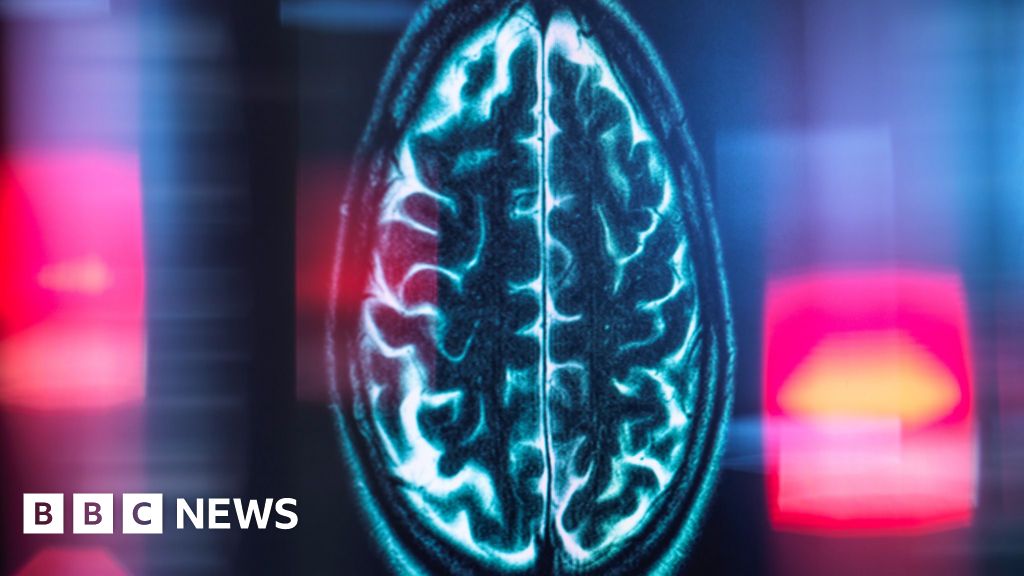
Getty Images The image shows a digital scan of a human brain - seen from above. You can make our the outlines and folks of the cortex.  Getty Images

Scientists have for the first time located the “mileage clock” inside a brain – by recording the brain activity of running rats.

Letting them loose inside a small, rat-sized arena, the researchers recorded from a part of their brains that is known to be important in navigation and memory.

They found that cells there “fired” in a pattern that looked like a mileage clock – ticking with every few steps the animal travelled.

A further experiment, where human volunteers walked through a scaled up version of this rat navigation test, suggested that the human brain has the same clock.

This study, published in the journal Current Biology, is the first to show that the regular ticking of “grid cells”, as they are known, is directly connected to the ability to correctly gauge the distance we’ve travelled.

Brain fog

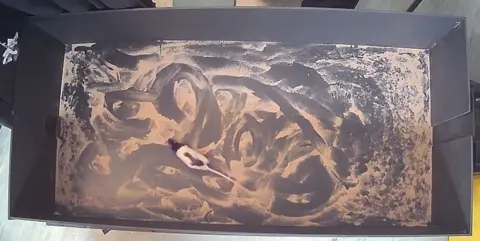
Stephen Duncan An aerial view of a black and white rat inside a large box - or arena - which neuroscientists have designed and built in order to carry out their experiment. The rat looks small as it moves through the large box from one end to the other. The walls of the 'rat arena' are black and the floor is mottles black and beige. Stephen Duncan

The scientists created an arena to train and test rats’ ability to estimate the distance they had run

“Imagine walking between your kitchen and living room,” said lead researcher Prof James Ainge from the University of St Andrews. “[These cells] are in the part of the brain that provides that inner map – the ability to put yourself in the environment in your mind.”

This study provides insight into exactly how that internal map in our brains works – and what happens when it goes awry. If you disrupt the ticking of that mileage clock by changing the environment, both rats and humans start getting their distance estimation wrong.

In real life, this happens in darkness, or when fog descends when we’re out on a hike. It suddenly becomes much more difficult to estimate how far we have travelled, because our mileage counter stops working reliably.

To investigate this experimentally, researchers trained rats to run a set distance in a rectangular arena – rewarding the animals with a treat – a piece of chocolate cereal – when they ran the correct distance and then returned to the start.

When the animals ran the correct distance, the mileage-counting cells in their brains fired regularly – approximately every 30cm a rat travelled.

“The more regular that firing pattern was, the better the animals were at estimating the distance they had to go to get that treat,” explained Prof Ainge.

The researchers were able to record the brain’s mileage clock counting the distance the rat had moved.

Crucially, when the scientists altered the shape of the rat arena, that regular firing pattern became erratic and the rats struggled to work out how far they needed to go before they returned to the start for their chocolate treat.

“It’s fascinating,” said Prof Ainge. “They seem to show this sort of chronic underestimation. There’s something about the fact that the signal isn’t regular that means they stop too soon.”

The scientists likened this to visual landmarks suddenly disappearing in the fog.

“Obviously it’s harder to navigate in fog, but maybe what we what people don’t appreciate is that it also impairs our ability to estimate distance.”

To test this in humans, the researchers scaled up their rat-sized experiment. They built a 12m x 6m arena in the university’s student union and asked volunteers to carry out the same task as the rats – walking a set distance, then returning to the start.

Just like rats, human participants were consistently able to estimate the distance correctly when they were in a symmetrical, rectangular box. But when the scientists moved the walls of their purpose-built arena to change its shape, the participants started making mistakes.

Prof Ainge explained: “Rats and humans learn the distance estimation task really well, then, when you change the environment in the way that we know distorts the signal in the rats, you see exactly the same behavioural pattern in humans.”
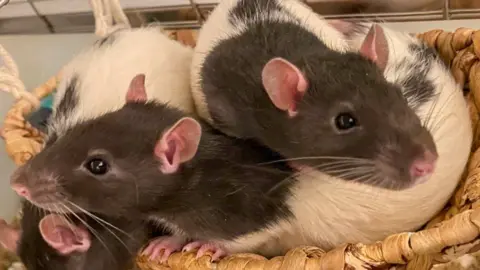
Silvia Ventura The image is a close-up of two laboratory rats - with black faces and white bodies. They are curled up together in a basket.Silvia Ventura

The pattern of behaviour was the same in rats and humans, so the scientists are confident that we have the same internal mileage clock in our brains

As well as revealing something fundamental about how our brains allow us to navigate, the scientists say the findings could help to diagnose Alzheimer’s Disease.

“The specific brain cells we’re recording from are in one of the very first areas that’s affected in Alzheimer’s,” explained Prof Ainge.

“People have already created [diagnostic] games that you can play on your phone, for example, to test navigation. We’d be really interested in trying something similar, but specifically looking at distance estimation.”

Getty Images The image shows two people holding hands. Only their hands are visible in the image. One hand is that of an elderly person, possibly a patient, who appears to be being helped by a carer who is holding their hand. Getty Images

The scientists believe the discovery could be useful in the early diagnosis of Alzheimer’s Disease


Source link

Tags: brainsclockinternalmileagepinpointScientists

Related Posts

Fly tippers face clearing up own rubbish as punishment

March 19, 2026
0

Fly tippers could face up to 20 hours of community service removing rubbish they have illegally dumped. Source...

Higgs Boson was UK triumph, but British physics faces ‘catastrophic’ cuts

March 18, 2026
0

Those experiments seek to answer some of the biggest questions in science. These include learning how the Universe began...

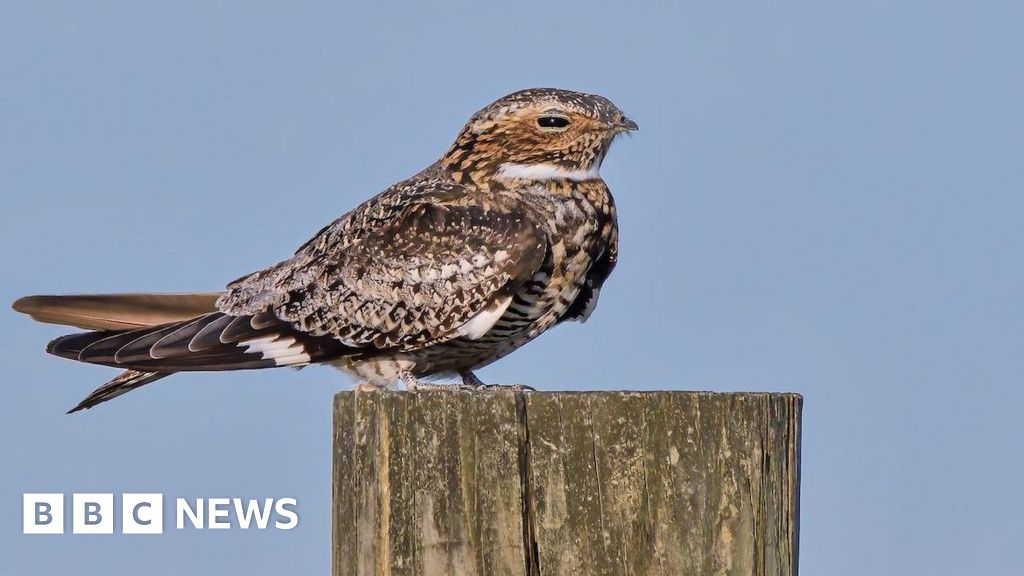
Elusive nightjar birds making remarkable comeback, conservationists say

March 17, 2026
0

An ecological survey has found 109 nightjar territories in the lowland heaths of east Hampshire. Source link

  • Australia helicopter collision: Mid-air clash wreckage covers Gold Coast

    522 shares
    Share 209 Tweet 131
  • UK inflation: Supermarkets say price rises will ease soon

    515 shares
    Share 206 Tweet 129
  • Ballyjamesduff: Man dies after hit-and-run in County Cavan

    510 shares
    Share 204 Tweet 128
  • Somalia: Rare access to its US-funded 'lightning commando brigade

    508 shares
    Share 203 Tweet 127
  • Google faces new multi-billion advertising lawsuit

    508 shares
    Share 203 Tweet 127
  • Trending
  • Comments
  • Latest

Australia helicopter collision: Mid-air clash wreckage covers Gold Coast

January 10, 2023

UK inflation: Supermarkets say price rises will ease soon

April 19, 2023

Ballyjamesduff: Man dies after hit-and-run in County Cavan

August 19, 2022

Stranger Things actor Jamie Campbell Bower praised for addiction post

0

NHS to close Tavistock child gender identity clinic

0

Cold sores traced back to kissing in Bronze Age by Cambridge research

0

Fly tippers face clearing up own rubbish as punishment

March 19, 2026

Child seen in sex abuse videos identified after researcher spots school badge

March 19, 2026

Spider-Man: Brand New Day trailer release is genius, says fan

March 19, 2026

Categories

Science

Fly tippers face clearing up own rubbish as punishment

March 19, 2026
0

Fly tippers could face up to 20 hours of community service removing rubbish they have illegally dumped. Source...

Read more

Child seen in sex abuse videos identified after researcher spots school badge

March 19, 2026
News

Copyright © 2020 JBC News Powered by JOOJ.us

Explore the JBC

  • Home
  • News
  • Sport
  • Worklife
  • Travel
  • Reel
  • Future
  • More

Follow Us

  • Home Main
  • Video
  • World
  • Top News
  • Business
  • Sport
  • Tech
  • UK
  • In Pictures
  • Health
  • Reality Check
  • Science
  • Entertainment & Arts
  • Login

Copyright © 2020 JBC News Powered by JOOJ.us

Welcome Back!

Login to your account below

Forgotten Password?

Create New Account!

Fill the forms bellow to register

All fields are required. Log In

Retrieve your password

Please enter your username or email address to reset your password.

Log In
This website uses cookies. By continuing to use this website you are giving consent to cookies being used. Visit our Privacy and Cookie Policy.
News
More Sites

    MORE

  • Home
  • News
  • Sport
  • Worklife
  • Travel
  • Reel
  • Future
  • More
  • News

    JBC News