









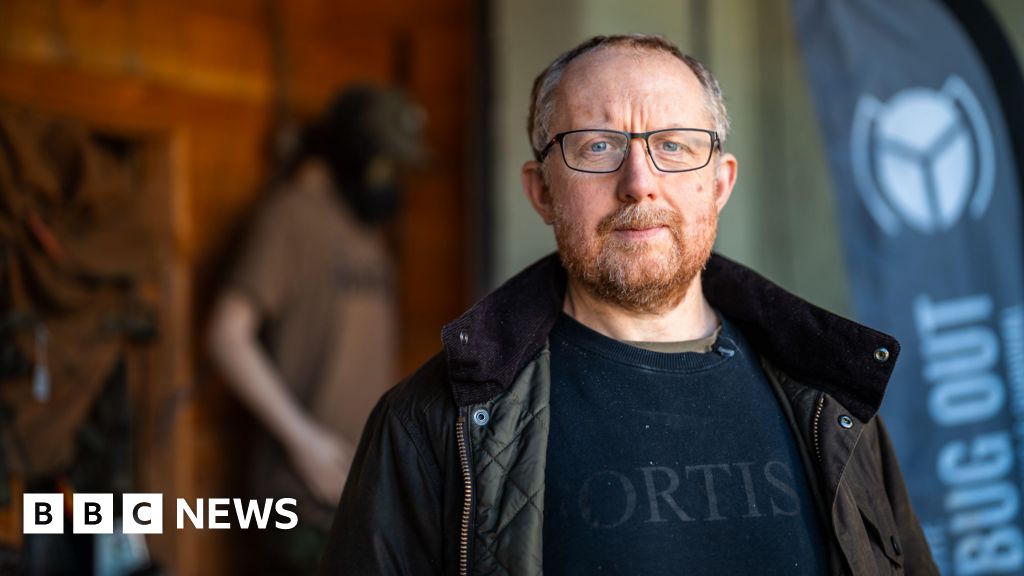












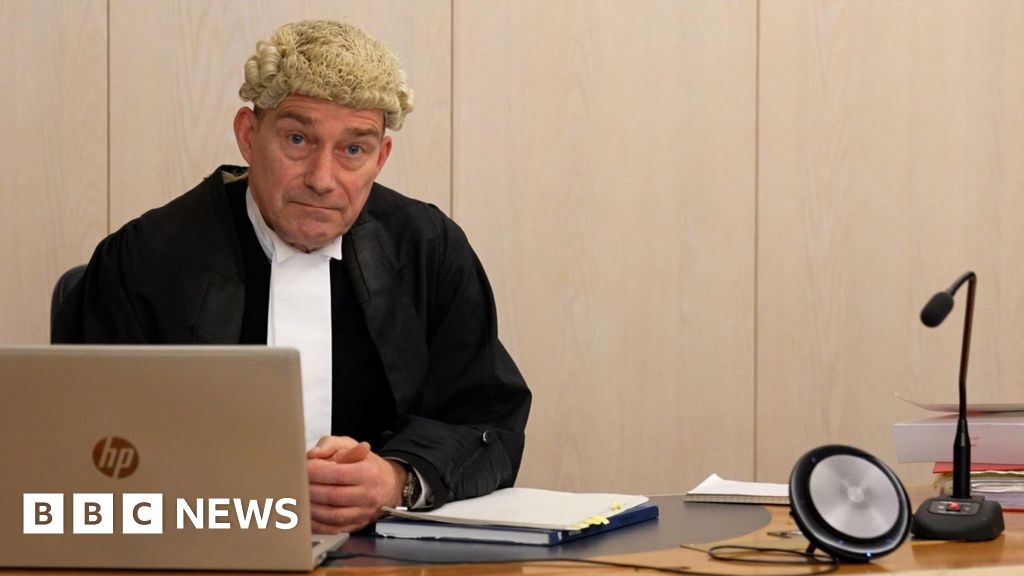
A Dundee sheriff robbed of his voice by motor neurone disease (MND) is continuing to dispense justice from the bench with the aid of new technology.
Alastair Carmichael was diagnosed with the disease in early 2024, and now communicates with staff, lawyers and the accused using synthetic voice apps.
He is believed to be the only judge in the world currently conducting criminal jury trials in this manner.
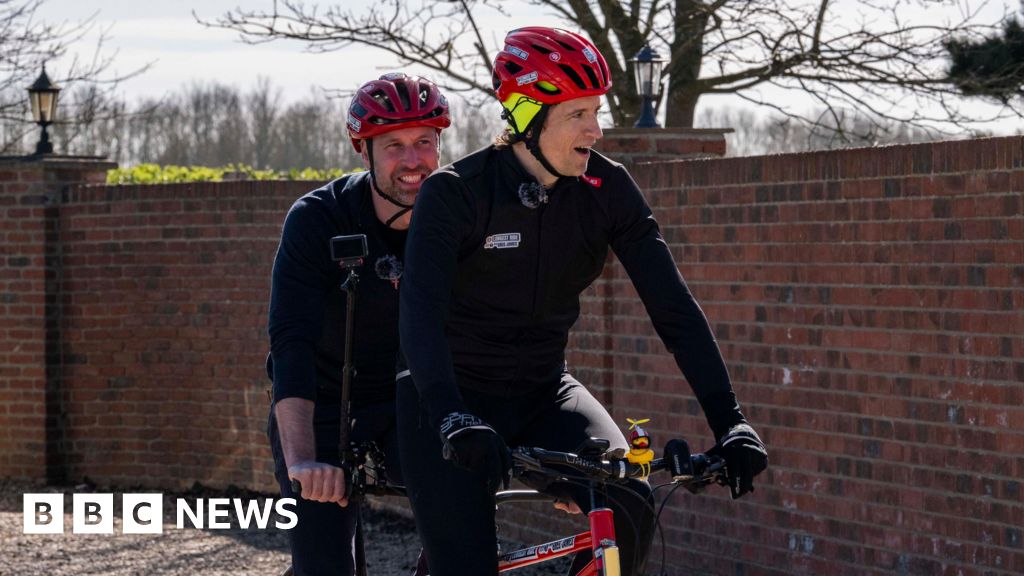
The sheriff was speaking ahead of former rugby league star Kevin Sinfield arriving in Dundee on Saturday as part of his 7 in 7: Together ultramarathon challenge to raise money for MND research and treatment.
MND is a neurodegenerative condition where messages from the brain and spinal cord stop reaching the muscles.
High-profile cases include former Scotland international rugby player Doddie Weir, who died at the age of 52 in 2022, six years after being diagnosed.
The 62-year-old sheriff, who has sat on the bench in Dundee for a decade, said he first noticed “something was up” when he developed a persistent lisp in May 2023.
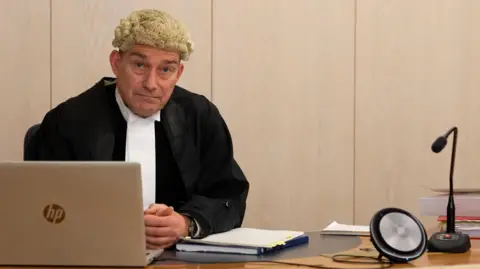
“The lisp didn’t go away as I had hoped it might,” he told BBC Breakfast.
“And then I found I was having to work a bit harder to get some consonants and words out.
“My oldest friend had MND and his voice had been affected so I suspected that something wasn’t right.”
The sheriff was initially reassured by his doctor that he did not have the condition, which affects about 480 people at any one time in Scotland.
He said: “However, she only had one symptom to go on, so I don’t blame her for not finding anything and at least it put my mind at rest for a few more months.”
After his symptoms progressed, he was referred to the neurology department at Ninewells Hospital, and ultimately diagnosed.


Unable to use his natural voice anymore at work, he has used an app called SpeakUnique to communicate in court for more than a year as he adjusts to what he calls “the new me.”
He said: “I have four different IT systems and I use them by having stored phrases that I can amend as needed and by also text to speak where I type in the letters and my synthetic voice says the words.”
“I think we’ve now come to the happy place where it’s just part of the furniture, and we can all just focus on the cases that are calling and on achieving justice in them.”
Sheriff Carmichael also uses visual cues in court, often pointing to the person he is about to address via the software to alert them.
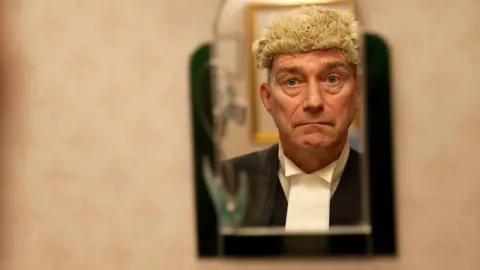
He downplays the unique working situation he finds himself in.
“I have never claimed to be the only judge using text to speak IT in order to conduct criminal jury trials, but I am the only one we are aware of so far,” he said.
“With all the IT that is around it wouldn’t surprise me if there were other somewhere, it’s a big world.
“For example, employment judge Hugh Lumby who also has MND is using similar IT in his work in the London South region.
“It doesn’t really matter if I am the first or how many judges there are using this kind of IT.”
What does matter, he believes, is that it shows that people with the condition or other illnesses can continue to work, if adjustments are made to suit their situation.
He said: “This allows employers to retain experienced staff and consistency and allows people to continue to work and contribute to society. What’s not to like about that?”
The sheriff is determined to continue working for as long as he can.
He said: “Working gives me a focus away from MND and it allows me to feel like I am still participating in society.
“I always felt grateful for the start that I had in life, and have wanted to give something back by contributing to society.
“My job is a very public one, and continuing to work gives me the chance to show that even if you have lost your voice, you can continue to work with the assistance of voice IT and with the assistance of positive-minded people.”
‘Massive efforts’
He is full of praise for Kevin Sinfield’s charity challenge, saying the ex-rugby league star is doing “amazing things” for MND research and treatment.
Sinfield was inspired by, and continues to run in memory of, his former Leeds team mate, Rob Burrow, who was diagnosed in 2019 and died, aged 41, in June last year.
The sheriff said: “His massive efforts are helping to put him MND in the public eye and are helping to encourage people and organisations to give generously.
“This money is funding research and funding assistance, every penny helps to make things better now and in the future.
“He is also showing that if you set your mind to achieve something, then you can indeed achieve it. “
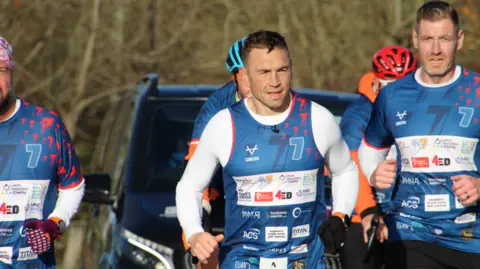 7 in 7
The sheriff said that his speech has now been affected to the extent that his family do not understand what he is saying, and his swallowing is now “less efficient.”
He said: “Beyond that, I am still mobile and can still do most things that I want to, although not necessarily in the same way as I used to.
“I must stress I could not have done this by myself.
“I’ve had help and support from my family, the medics, from the judges, from the court staff, and from the lawyers in court.”
He said that MND is a “nasty disease” that no one should have to face alone.
He said: “I am now far more reliant on other people than I used to be, and this is a humbling situation to be in.
“I’m lucky because the people who I work with have embraced risk and are willing to give it a go and see what happens.”