

























News
  • Login
  • Home
  • News
  • Sport
  • Worklife
  • Travel
  • Reel
  • Future
  • More
Wednesday, December 3, 2025
No Result
View All Result

NEWS

3 °c
London
8 ° Wed
9 ° Thu
11 ° Fri
13 ° Sat
  • Home
  • Video
  • World
    • All
    • Africa
    • Asia
    • Australia
    • Europe
    • Latin America
    • Middle East
    • US & Canada

    Australia won’t be intimidated by tech firms, minister tells BBC

    Rare Fabergé egg fetches record £22.9m at London auction

    Was the coup real or a ‘sham’?

    Flood catastrophe awakens volunteerism in Sri Lanka

    Putin hosts US negotiators at Kremlin for Ukraine talks

    What is Honduras president accused of and why has Trump pardoned him?

    Pope prays at site of Beirut port blast at end of Lebanon visit

    Host of birthday party in Stockton, California says she mistook gunfire for balloons popping

    Climate protesters in kayaks disrupt operations at Australia port

  • UK
    • All
    • England
    • N. Ireland
    • Politics
    • Scotland
    • Wales

    China spy case collapse could happen again, MPs warn

    Sheriff with MND finds new voice in court with app

    Cardiff’s tourist tax to be used for big events ‘like Oasis gigs’

    ‘Culture of indifference towards safeguarding’ found at Belfast church

    Chinese mega embassy could bring security advantages, says No 10

    Sixth form student killed in Tadcaster minibus crash named

    10 acts you’ll be obsessed with next year

    Future uses for Interfloor factory near Dumfries examined

    James Bond Aston Martin left to rust on drive now worth £1m

  • Business
    • All
    • Companies
    • Connected World
    • Economy
    • Entrepreneurship
    • Global Trade
    • Technology of Business

    ‘Carspreading’ is on the rise

    British Gas boss concerned for Scotland’s energy industry jobs

    Reeves speech did not mislead on challenges facing UK ahead of Budget, says OBR official

    OBR head’s resignation leaves potential landmines for Reeves

    Car-sharing company ZipCar to end UK operations

    How is the Budget affecting businesses in Surrey?

    North Tyneside GP says debt stress causing mental health issues

    Jaguar Land Rover posts heavy loss after cyber-attack

    Call for probe into ‘possible market abuse’ in Budget run-up

  • Tech
  • Entertainment & Arts

    Dancers say Lizzo ‘needs to be held accountable’ over harassment claims

    Freddie Mercury: Contents of former home being sold at auction

    Harry Potter and the Cursed Child marks seven years in West End

    Sinéad O’Connor: In her own words

    Tom Jones: Neighbour surprised to find singer in flat below

    BBC presenter: What is the evidence?

    Watch: The latest on BBC presenter story… in under a minute

    Watch: George Alagiah’s extraordinary career

    BBC News presenter pays tribute to ‘much loved’ colleague George Alagiah

    Excited filmgoers: 'Barbie is everything'

  • Science
  • Health
  • In Pictures
  • Reality Check
  • Have your say
  • More
    • Newsbeat
    • Long Reads

NEWS

No Result
View All Result
Home Business

Swiss scientists cut waste and sugar

August 27, 2024
in Business
11 min read
238 15
0
491
SHARES
1.4k
VIEWS
Share on FacebookShare on Twitter


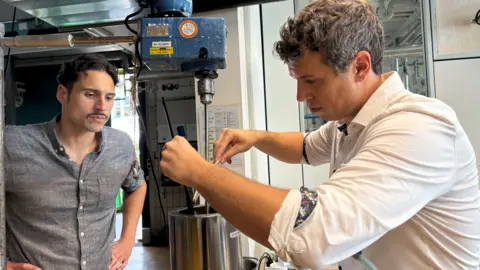
Imogen Foulkes Kim Mishra (L) and Anian Schreiber (R) working together in a laboratoryImogen Foulkes

Kim Mishra (L) and Anian Schreiber (R) cooperated on the new chocolate making process

Imagine picking up a nice juicy apple – but instead of biting into it you keep the seeds and throw the rest away.

That’s what chocolate producers have traditionally done with the cocoa fruit – used the beans and disposed of the rest.

But now food scientists in Switzerland have come up with a way to make chocolate using the entire cocoa fruit rather than just the beans – and without using sugar.

The chocolate, developed at Zurich’s prestigious Federal Institute of Technology by scientist Kim Mishra and his team includes the cocoa fruit pulp, the juice, and the husk, or endocarp.

The process has already attracted the attention of sustainable food companies.

They say traditional chocolate production, using only the beans, involves leaving the rest of the cocoa fruit – the size of a pumpkin and full of nutritious value – to rot in the fields.

The key to the new chocolate lies in its very sweet juice, which tastes, Mr Mishra explains, “very fruity, a bit like pineapple”.

This juice, which is 14% sugar, is distilled down to form a highly concentrated syrup, combined with the pulp and then, taking sustainability to new levels, mixed with the dried husk, or endocarp, to form a very sweet cocoa gel.

The gel, when added to the cocoa beans to make chocolate, eliminates the need for sugar.

Mr Mishra sees his invention as the latest in a long line of innovations by Swiss chocolate producers.

In the 19th Century, Rudolf Lindt, of the famous Lindt chocolate family, accidentally invented the crucial step of “conching” the chocolate – rolling the warm cocoa mass to make it smooth and reduce its acidity – by leaving a cocoa mass mixer running overnight. The result in the morning? Deliciously smooth, sweet chocolate.

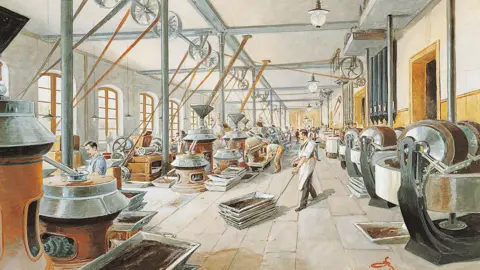
Lindt An old drawing of chocolate production in a Lindt factoryLindt

Lindt has been making chocolate since the 19th Century

“You need to be innovative to maintain your product category,” says Mr Mishra. “Or… you will just make average chocolate.”

Mr Mishra was partnered in his project by KOA, a Swiss start-up working in sustainable cocoa growing. Its co-founder, Anian Schreiber, believes using the entire cocoa fruit could solve many of the cocoa industry’s problems, from the soaring price of cocoa beans to endemic poverty among cocoa farmers.

“‘Instead of fighting over who gets how much of the cake, you make the cake bigger and make everybody benefit,” he explains.

“The farmers get significantly extra income through utilising cocoa pulp, but also the important industrial processing is happening in the country of origin. Creating jobs, creating value that can be distributed in the country of origin.”

Mr Schreiber describes the traditional system of chocolate production, in which farmers in Africa or South America sell their cocoa beans to big chocolate producers based in wealthy countries as “unsustainable”.

Imogen Foulkes Letizia Pinoja views a vintage poster at the exhibition exploring Switzerland's colonial pastImogen Foulkes

Letizia Pinoja says that without trade in colonial goods Switzerland would not be the land of chocolate

The model is also questioned by a new exhibition in Geneva, which explores Switzerland’s colonial past.

To those who point out that Switzerland never had any colonies of its own, chocolate historian Letizia Pinoja counters that Swiss mercenary soldiers policed other countries’ colonies, and Swiss ship owners transported slaves.

Geneva in particular, she says, has a particular link to some of the most exploitative phases of the chocolate industry.

“Geneva is a hub for commodity trade, and since the 18th Century, cocoa was reaching Geneva and then the rest of Switzerland to produce chocolate.

“Without this commodity trade of colonial goods, Switzerland could never have become the land of chocolate. And cocoa is no different from any other kind of colonial good. They all came from slavery.”

Nowadays, the chocolate industry is much more highly regulated. Producers are supposed to monitor their entire supply chain to make sure there is no child labour. And, from next year, all chocolate imported to the European Union must guarantee that no deforestation took place to grow the cocoa used in it.

But does that mean all the problems are solved? Roger Wehrli, director of the association of Swiss chocolate manufacturers, Chocosuisse, says cases of child labour and deforestation remain, particularly in Africa. He fears that some producers, in a bid to avoid the challenges, are simply shifting their production to South America.

“Does this solve the problem in Africa? No. I guess it would be better for responsible firms to stay in Africa and help to improve the situation.”

That is why Mr Wehrli sees the new chocolate developed in Zurich as “very promising… If you use the whole cocoa fruit, you can get better prices. So it’s economically interesting for the farmers. And it’s interesting from an ecological point of view.”
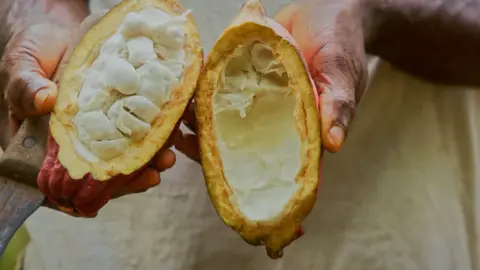
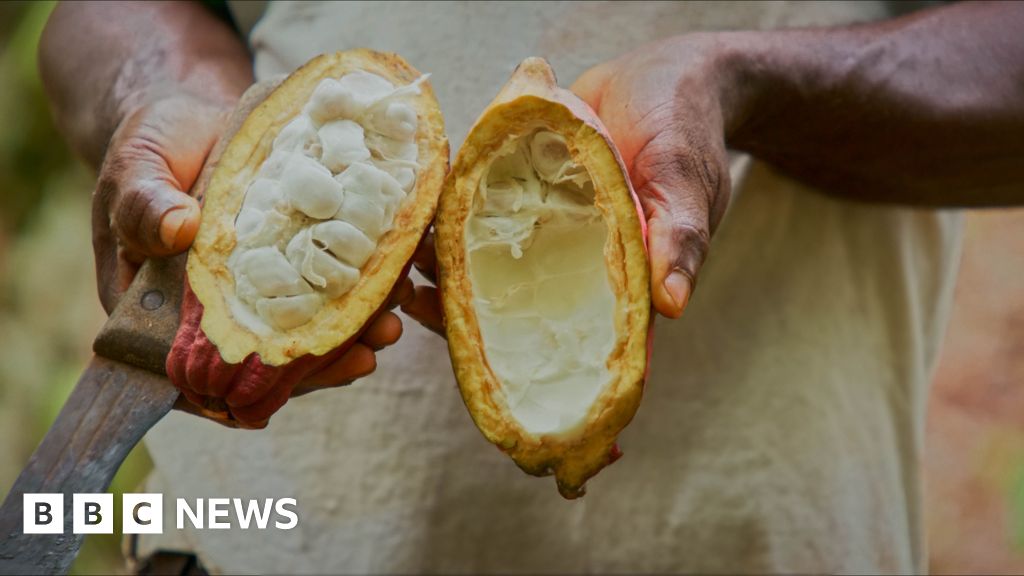
Chocosuisse Two halves of a cocoa fruit are held in someone's handsChocosuisse

The whole of the cocoa fruit can now be used to make chocolate

The link between chocolate production and the environment is also stressed by Anian Schreiber. A third of all farm produce, he says, “never ends up in our mouths”.

Those statistics are even worse for cocoa, if the fruit is abandoned to use only the beans. “It’s like you throw away the apple and just use its seeds. That’s what we do right now with the cocoa fruit.”

Food production involves significant greenhouse gas emissions, so reducing food waste could also help to tackle climate change. Chocolate, a niche luxury item, may not by itself be a huge factor, but both Mr Schreiber and Mr Wehrli believe it could be a start.

But, back in the laboratory, key questions remain. How much will this new chocolate cost? And, most important of all, without sugar, what does it really taste like?

The answer to the last question, in this chocolate-loving correspondent’s view, is: surprisingly good. A rich, dark but sweet flavour, with a hint of cocoa bitterness that would fit perfectly with an after dinner coffee.

The cost may remain something of a challenge, because of the global power of the sugar industry, and the generous subsidies it receives. “The cheapest ingredient in food will always be sugar as long as we subsidise it,” explains Kim Mishra. “For a… tonne of sugar, you pay $US500 [£394] or less.” Cocoa pulp and juice cost more, so the new chocolate would, for now, be more expensive.

Nevertheless, chocolate producers in countries where cocoa is grown, from Hawaii to Guatemala, to Ghana have contacted Mr Mishra for information about the new method.
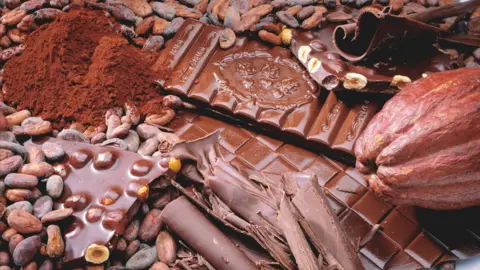
Chocosuisse Close up shot showing a variety of broken chocolate and cocoa fruitChocosuisse

No Swiss chocolate companies have eliminated the use of sugar completely

In Switzerland, some of the bigger producers – including Lindt – are starting to use the cocoa fruit as well as the beans, but none, so far, has taken the step of eliminating sugar completely.

“We have to find daring chocolate producers who want to test the market and are willing to contribute to a more sustainable chocolate,” says Mr Mishra. “Then we can disrupt the system.”

Perhaps those daring producers will be found in Switzerland, whose chocolate industry makes 200,000 tonnes of chocolate each year, worth an estimated $US2bn. At Chocosuisse, Roger Wehrli sees a more sustainable, but still bright, future.

“I think chocolate will still taste fantastic in the future,” he insists. “And I think the demand will increase in the future due to the growing world population.”

And will they be eating Swiss chocolate? “Obviously,” he says.

More Technology of Business


Source link

Tags: cutScientistsSugarSwisswaste

Related Posts

‘Carspreading’ is on the rise

December 3, 2025
0

Theo LeggettInternational Business CorrespondentBBCCritics call it "carspreading". In the UK and across Europe, cars are steadily becoming longer, wider...

British Gas boss concerned for Scotland’s energy industry jobs

December 3, 2025
0

Michael Race & Sean FarringtonBusiness reporter & business presenterChris O'Shea was speaking to the BBC as part of the...

Reeves speech did not mislead on challenges facing UK ahead of Budget, says OBR official

December 3, 2025
0

Michael RaceBusiness reporterGetty ImagesA senior official at the UK's economic forecaster has said he does not believe the chancellor...

  • Australia helicopter collision: Mid-air clash wreckage covers Gold Coast

    520 shares
    Share 208 Tweet 130
  • UK inflation: Supermarkets say price rises will ease soon

    513 shares
    Share 205 Tweet 128
  • Ballyjamesduff: Man dies after hit-and-run in County Cavan

    510 shares
    Share 204 Tweet 128
  • Somalia: Rare access to its US-funded 'lightning commando brigade

    508 shares
    Share 203 Tweet 127
  • Google faces new multi-billion advertising lawsuit

    508 shares
    Share 203 Tweet 127
  • Trending
  • Comments
  • Latest

Australia helicopter collision: Mid-air clash wreckage covers Gold Coast

January 10, 2023

UK inflation: Supermarkets say price rises will ease soon

April 19, 2023

Ballyjamesduff: Man dies after hit-and-run in County Cavan

August 19, 2022

Stranger Things actor Jamie Campbell Bower praised for addiction post

0

NHS to close Tavistock child gender identity clinic

0

Cold sores traced back to kissing in Bronze Age by Cambridge research

0

West Yorkshire mayor says too many families are ‘working poor’

December 3, 2025

China spy case collapse could happen again, MPs warn

December 3, 2025

Stranger Things star to make her West End debut

December 3, 2025

Categories

Science

West Yorkshire mayor says too many families are ‘working poor’

December 3, 2025
0

Gemma Dillon,West Yorkshire political reporterandRima Ahmed,BBC Radio LeedsBBCTracy Brabin says the emphasis on mayors in the Budget is "revolutionary"West...

Read more

China spy case collapse could happen again, MPs warn

December 3, 2025
News

Copyright © 2020 JBC News Powered by JOOJ.us

Explore the JBC

  • Home
  • News
  • Sport
  • Worklife
  • Travel
  • Reel
  • Future
  • More

Follow Us

  • Home Main
  • Video
  • World
  • Top News
  • Business
  • Sport
  • Tech
  • UK
  • In Pictures
  • Health
  • Reality Check
  • Science
  • Entertainment & Arts
  • Login

Copyright © 2020 JBC News Powered by JOOJ.us

Welcome Back!

Login to your account below

Forgotten Password?

Create New Account!

Fill the forms bellow to register

All fields are required. Log In

Retrieve your password

Please enter your username or email address to reset your password.

Log In
This website uses cookies. By continuing to use this website you are giving consent to cookies being used. Visit our Privacy and Cookie Policy.
News
More Sites

    MORE

  • Home
  • News
  • Sport
  • Worklife
  • Travel
  • Reel
  • Future
  • More
  • News

    JBC News