













 Supplied
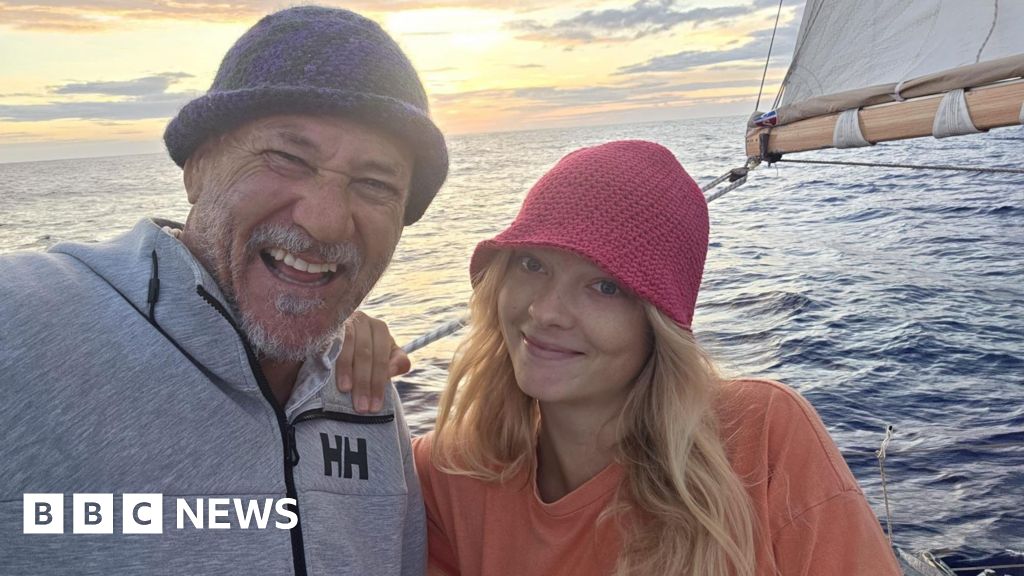
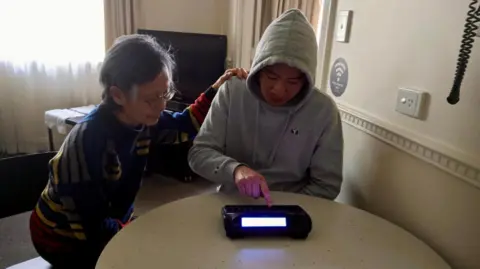
For Tim Chan, who is unable to speak, facilitated communication is “a lifeline” that allows him to do things he once thought impossible, such as socialising, or studying for his PhD.
“I was presumed incompetent, and ignored or dismissed,” the 29-year-old, who was diagnosed with autism as a toddler, says using a text-to-voice tool in his home in Melbourne.
Facilitated communication involves someone guiding the hand, arm or back of a non-verbal person, so that they can point to letters or words on a bespoke keyboard.
Mr Chan’s facilitator is his mother Sarah, and, over the past 20 years, her support has “faded” to a slight touch of his shoulder, which he says keeps him “focused”.
Advocates insist it is a miracle tool, one which gives disabled people a voice.
But a growing chorus of experts, families and even former facilitators want it banned, due to research indicating that the likely author of the messages is the facilitator, not the communicator.
They cite a string of criminal allegations made by non-verbal people using the method which have been dismissed by the courts and investigators.
The debate has sparked allegations of ableism, ruined legacies, inspired a new Louis Theroux documentary, and an international conversation about the power dynamics between disabled people and those who care for them.
A misguided invention
Facilitated communication was created in 1977 by Australian disability advocate Rosemary Crossley, who died last year and left a complex legacy.
To those who knew her, she’s remembered as champion for “people with little or no functional speech”.
But others say her communications invention – and her formidable defence of it – were misguided and harmful. It is still used worldwide, despite being widely criticised.
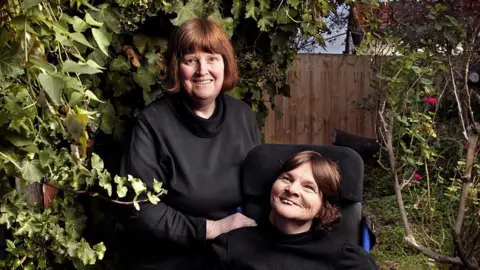
The first notable subject to use facilitated communication was Anne McDonald, a non-verbal Australian woman with cerebral palsy, a severe intellectual disability, and no control over her limbs.
At the time, Crossley claimed that McDonald – then 16 – could communicate by pointing at magnetic letters while Crossley supported her upper arm.

 Getty Images
Within weeks McDonald was spelling out whole sentences and doing fractions, despite having no formal education and being institutionalised since age three.
Some of Crossley’s colleagues expressed surprise that McDonald, who’d never read, could suddenly write eloquent prose, and cite literary references, when her arm was held by the highly educated Crossley.
One who raised questions was the institution’s head paediatrician and psychiatrist Dr Dennis Maginn, who wouldn’t validate Crossley’s communication theory without independent testing.
McDonald later accused him, facilitated by Crossley’s supported typing, of attempting to smother her to death with a pillow. Homicide investigators dismissed the claims, but his career never recovered.
“My thoughtful, introspective and well-intentioned father went through living hell,” his son, lawyer Paul Maginn, says, adding that “any right-thinking person” could see the allegation had been made up by Crossley.
Crossley even had her own initial doubts about the technique, writing at the time: “What I did not know was whether I was subconsciously manipulating [Anne] or imagining her hand movements.’’
McDonald – who ended up leaving the institution and living with Crossley – went on to use the method with other facilitators. She also earned a humanities degree and co-authored the book Annie’s Coming Out, which was turned into an award-winning film.
But despite all these achievements, McDonald’s mother Beverley “never believed” that her daughter could communicate: “I asked her questions and got nowhere,” she told the ABC in 2012, after her daughter died.
Science v advocacy
For Marlena Katene, facilitated communication has allowed her to “connect and say whatever I want”.
The 33-year-old Gold Coast native selects words using a keyboard. Her facilitator Bert, or a text-to-voice tool, then reads them aloud.
Speaking to the BBC both with and without Bert, Ms Katene says it’s “frustrating being constantly tested to be validated” and that “communication is about humanity more than science”.
She finds it alarming that some academics and disability advocacy organisations have led campaigns to disprove what she says is an effective method for thousands worldwide.
But experts have uncovered different findings, using a ‘double-blind’ experiment.
The method involves the facilitator and communicator being separated and given different prompts to study, such as a picture, before coming back together to take a test.
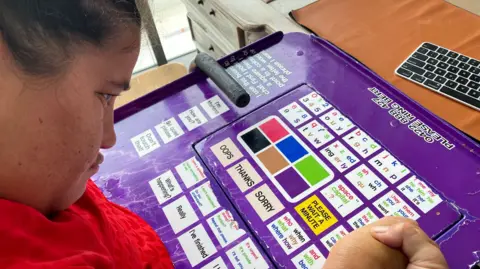
In more than 30 empirical studies, the non-verbal person ends up typing the prompts the facilitator was shown, meaning there’s no convincing evidence that messages written using facilitated communication are authored by the person with a disability.
“The science just isn’t there,” Howard Shane, an associate professor at Harvard Medical School, tells the BBC.
Courts have reached the same conclusion.
A bevy of parents and caregivers have found themselves on trial over allegations – often sexual abuse – unearthed by facilitated communication.
Prof Shane has given evidence in 12 such cases – including that of Jose Cordero, who spent 35 days in a Miami jail and was barred from seeing his family for months after being accused, via a facilitator, of sexually abusing his seven-year-old autistic son. The case was dropped, citing a lack of credibility in facilitated communication.
In every trial he’s been involved in, testing proved the facilitator was the author of the accusations, Prof Shane says, or “they refused to participate” in testing altogether, citing “anxiety”.
But one of the most high profile facilitated communication cases – now the subject of a Netflix documentary – questioned whether the method could be used to provide proof of consent.
 Essex County Correctional Facility
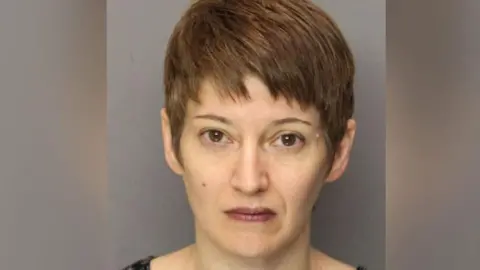
In 2015, university professor Anna Stubblefield was found guilty of aggravated sexual assault for raping a non-verbal 33-year-old man with severe mental disabilities and cerebral palsy. Facilitated communication testimony from the man was ruled unreliable under New Jersey’s test for scientific evidence.
Two years later, an appeals court overturned Stubblefield’s conviction, ordering a retrial on the basis that it was a violation of her rights to not allow her to use facilitated communication as a defence. In 2018 she pleaded guilty to a lesser charge and was sentenced to time served.
She maintains the relationship was consensual and that the two were “intellectual equals in love”. Prof Shane’s controlled testing concluded that the man had the intellectual ability of a six-month-old.
Testifying in Stubblefield’s case James Todd, a psychology professor at Eastern Michigan University, argued that the university where Stubblefield received her training held some responsibility for the crime. He said Syracuse University was “championing facilitated communication over clear and established science,” and implored it to “renounce and repudiate” the technique for its “dangerous harms.”
Syracuse University, one of the only universities with a facilitated communication institute, did not respond to repeated requests for comment.
‘More harm than good’
The BBC approached five different academic experts on facilitated communication worldwide to speak about the technique. All declined.
At least 30 medical associations worldwide oppose facilitated communication. Many, such as the UK’s National Autistic Society, warn that it’s “ineffective” and able to cause “significant harm.”
Other opponents include the UK’s National Institute for Health and Care Excellence, The American Psychological Association, the American Academy of Paediatrics and Speech Pathology Australia.
These organisations cite peer-reviewed evidence indicating the technique is discredited pseudoscience and have flagged the risks it poses to disabled people, their families, and facilitators themselves, because of potential false allegations.
Clinical psychologist Adrienne Perry has warned the non-verbal person “is made a ‘screen’ for a facilitator’s hostilities, hopes, beliefs or suspicions”.
For speech trainer Janyce Boynto – who did her facilitated communication training at the University of Maine – the discovery was shocking.
She’d been facilitating the communication of a 16-year-old non-verbal autistic girl, who’d accused her father and brother of sexual abuse via Ms Boynton’s facilitation. Prof Shane was called in to do a double-blind test with pictures.
“It turned out, even though I believed in facilitated communication, I was the author of all the answers,” Ms Boynton tells the BBC. “It was irrefutable. You just didn’t realise it.”
It left her feeling “terrible, confused and devastated”.
“I believe most facilitators are sincere,” she says. “They want to believe it’s true.”
 Supplied
Today, Tim Chan types that such criticisms are “extremely damaging”.
“We start doubting our ability to be a person in our own right,” he says, via his mum’s facilitation.
He has never undertaken the double-blind test.
“Testing a person with non-verbal autism will make them very anxious. They process information differently,” Ms Chan says. “It’s possible there’s some unconscious cueing going on. I don’t know,” she adds.
Prof Shane and academic specialists in speech, communications, psychology, and developmental disabilities all say the technique should be banned. “I recently worked on a case where somebody was in jail for a year before it finally emerged no testing was done,” Prof Shane says. “He was released when testing showed the allegations were false.”
But facilitated communication is still practised in some specialised schools, disability centres and institutes in the USA, Europe, Australia, and Asia.
Part of the reason, Prof Shane says, is that families and facilitators “believe so strongly” their child has hidden skills.
“They need to accept the children for who they are – rather than what they’d like them to be.”