
 Getty Images
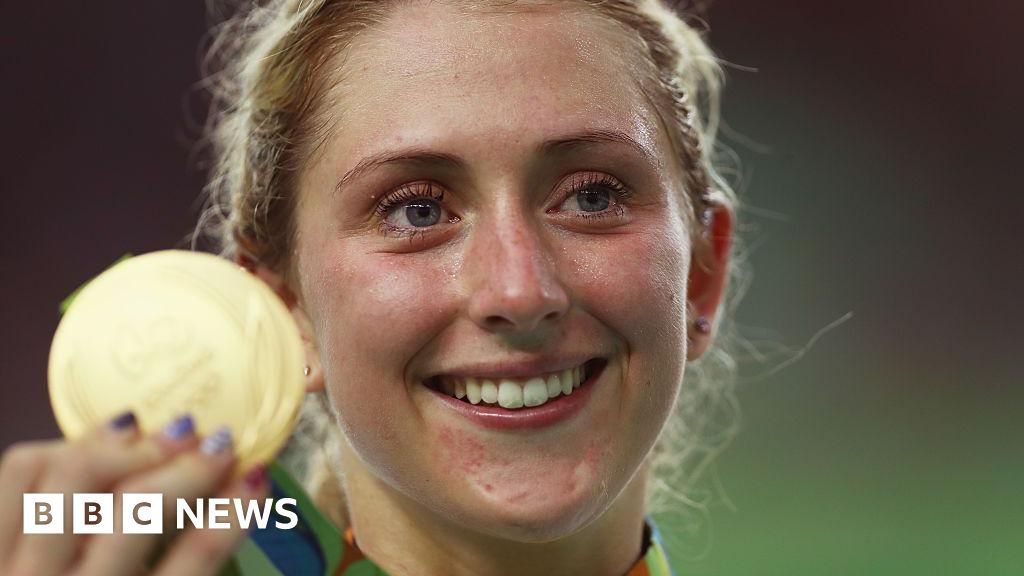
Dame Laura, 32, gave her body to cycling for more than a decade. She is Britain’s most successful female athlete.
“Every training session I went in there to give 100%, every race I went in there to give 100%.
“I took it to the limit – if I wasn’t sick after a race I’d be like, ‘Did I try hard enough?'”
That absolute commitment was rewarded in the velodrome. Two golds at the London 2012 Olympics were followed by two more at Rio 2016.
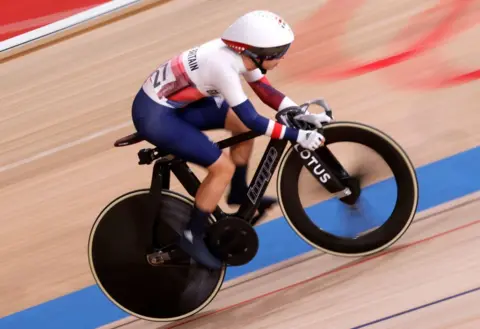
She married fellow cycling phenomenon Jason Kenny later that year and the couple welcomed their first baby, Albie, in 2017. She then secured another gold and silver medal at the Tokyo Olympics (held in 2021).
But she miscarried in November 2021 and five months later had an ectopic pregnancy, in which the embryo implants outside of the womb, requiring emergency surgery.
“Everything was a shock – I went from being so in control of my body to being so out of control,” she told Radio 4’s Today programme.
She had never really worried about her own fertility before. Conceiving Albie had been straightforward, and that pregnancy went smoothly. And thankfully, she would successfully give birth to another son, Monty, in July 2023.
But – as Dame Laura began to talk publicly about her baby losses – other athletes told her they had been through the same thing.
It has left a nagging question – could elite sport have a damaging impact on the fertility of female athletes?
“Was my body just running on empty, and then it said, ‘Well, hang on, there’s no way we can do this?'” she says.
Allow Instagram content?
Miscarriage is common. The NHS says one-in-eight known pregnancies end before 24 weeks and many occur at a very early stage. Most couples never find out why.
But are athletes at greater risk of any type of fertility problem?
Dr Emma O’Donnell, an exercise physiologist at Loughborough University, says the lifestyle of a professional athlete puts a unique strain on the human body.
Elite training burns a phenomenal number of calories and, as a result, athletes’ bodies are often lean and muscular, containing very little body fat.
If they don’t eat enough food to keep up with the calorie burn then issues with menstrual cycles, such as periods stopping for months or even years, are “very common”, Dr O’Donnell says.
Nearly two-thirds of female athletes experience interrupted periods, particularly in endurance sports. There are comparably high rates of periods disappearing in competitors in sports like gymnastics, ballet and figure skating. This compares to only 2-5% of the general population.
Absent periods can be a sign that ovulation (or egg release) isn’t happening.
How does that happen in the body?
“We’re not 100% sure,” says Dr O’Donnell, but the leading idea is that having a baby is so energy-intensive that the brain shuts off reproduction if it thinks there is insufficient spare energy.
It starts in the hypothalamus, a small structure in the centre of the brain that senses the nutritional state of the body.
Sitting just underneath the hypothalamus is the body’s hormone factory – the pituitary gland.
Normally, the gland releases hormones that travel down to the womb and ovaries to control the monthly menstrual cycle and the release of an egg, which makes pregnancy possible.
But if the hypothalamus isn’t happy, this process breaks down and ovulation doesn’t happen.
“If you’re not ovulating you can’t have a baby. You can’t conceive because there’s no egg being released,” says Dr O’Donnell.
The biggest factor in this seems to be the huge number of calories burned while training, which can leave athletes struggling to eat enough food to compensate.
This phenomenon is known as relative energy deficiency in sport (RED-S), and was first recognised by the International Olympic Committee in 2014.
But other factors are also likely to be involved, says Prof Geeta Nargund, a consultant at St George’s Hospital and medical director of Create Fertility.
Fat in the body helps make the sex hormone oestrogen.
“If the sport is affecting body fat content, then quite clearly there’s an effect on oestrogen levels,” she says.
Psychological stress – potentially from the pressures of training and competing – can also disrupt the menstrual cycle.
“We do see this in women with high levels of anxiety,” said Dr O’Donnell.
Disruption to periods and egg release is the most clearly recognised impact on a female athlete’s fertility, but this should resolve once they retire from competition, she notes.

 Getty Images
Ectopic and miscarriage
For those who do manage to conceive, things can still go wrong. After an egg is fertilised, it should implant into the lining of the womb. However, in an ectopic pregnancy the egg implants elsewhere, usually in the fallopian tubes that connect the ovaries to the womb.
Around 11,000 pregnancies a year in the UK are ectopic. It’s not completely clear why they happen, although inflammation and scar tissue in the fallopian tubes can increase the risk.
“But in this case, I don’t see a direct link between sports and an increased incidence of ectopic pregnancy,” said Prof Nargund, who has treated athletes struggling with their fertility.
However, she said there was a potential link between too much intense exercise in the first three months of pregnancy and miscarriage – although far more research is needed to be certain.
She pointed to a large Danish study that followed more than 90,000 women and suggested the more intense exercise women did, the higher the risk. This was particularly for weight-bearing and high-impact exercises.
“If you end up in the Laura Kenny territory where you’re an elite athlete, you’re the very top of that,” Prof Nargund said.
But she explained the findings needed to be taken “with caution” because the way the study was designed meant there could be other explanations that had not been considered.
Meanwhile, a very small study of 34 Norwegian athletes found no increased risk of fertility problems, including miscarriage.
“We need to do a lot more research when it comes to sports, exercise, hormone balance and reproduction,” says Prof Nargund.
Athletes freezing their eggs
Lauren Nicholls played elite level netball for 10 years then had two children, before becoming coach of Super League champions Loughborough Lightning. She says the conversations current players have about fertility are different to the ones she had with her teammates.
“I know a few of the slightly older players – they’ve frozen eggs and made those decisions for their family for a later date,” she says. “Because they’re worried about their career.”
Juggling being an elite athlete and starting a family has always been a tricky challenge. For women, their years of peak fertility overlap with the time they hit their physical peak.
Male athletes are also not immune to fertility issues. Burning more energy than you have coming in may affect testosterone levels, cause sperm abnormalities and even erectile dysfunction.
But for Dr Emma Pullen, a sports exercise researcher at Loughborough, the lack of definitive answers on the impact of elite sport is emblematic of how poorly female athletes have been researched, from fertility to injury risk.
She said research was “playing catch up” with the amount of attention on male sport.
“We’re seeing the repercussions of that with growing professionalisation of women’s sports and more female athletes than ever before,” Dr Pullen adds.
Overall, Prof Nargund argues female athletes are likely to face more fertility challenges than other women.
“There seems to be a fertility problem because of [elite sport’s] potential effect on ovulation, including potentially a higher risk of miscarriage,” she says.
But a definitive answer on exactly how much elite-level exercise is too much is not clear. And that’s enough for Dame Laura, for now.
“The conversation in itself I feel is really important because I want people to start talking,” Laura says. “Honestly, I would love it if it was a lot more open.”
The relationship between exercise and fertility affects all of us though, even if we’re a long way from Olympic glory.
How does exercise affect everyone else’s fertility?

Most men and women benefit from exercising and losing excess weight before trying to conceive – this is known to boost fertility.
Regular physical activity reduces stress, improves sleep and makes periods more regular in those with the hormonal condition polycystic ovary syndrome (PCOS).
But amateur female athletes who train intensively can also end up running on empty and seeing their periods stop, or become irregular.
“Not to quite the same extent, but it’s there,” says Dr O’Donnell.
Making sure there’s a balance between energy intake and energy output is “really important to ovulatory cycles” and the key to maintaining reproductive function, she adds.
“[Amateur athletes] are not aware of the fact of how many calories they really need to put in to meet that energy demand.”