









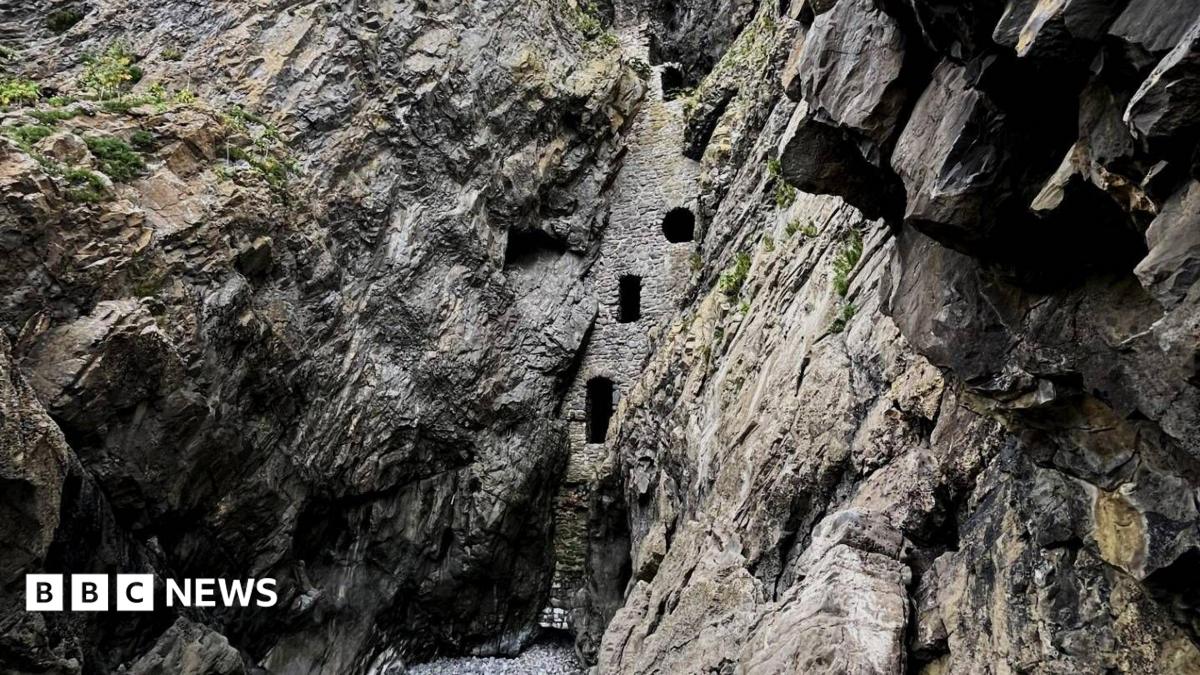






















Hidden in the cliffs on a scenic part of Wales’ coastline, Culver Hole has long mystified historians and inspired stories of pirates and smuggling.
Helen Nicholas was just six when her dad took her on an adventure “over the cliff” to explore the cave.
As soon as they clambered around the corner, the 60ft stone wall with mismatched windows came into view and she “was absolutely hooked” with what she saw as “a castle in the rock”.
Commonly thought to be a dovecot due to its internal ledges, Ruth Ridge, a volunteer with Gower Society and National Trust volunteer, questioned “why build a pigeon house in such an inaccessible spot?”
“We don’t know who built it or why.”
“You feel exposed before you even step inside, the sea surges below, the air is damp and echoing and, despite the stonework, it never stops feeling like a cave,” said Helen, 50, who is the director of Gower Unearthed.
She said it was easy to imagine a man standing on a windy cliff, hurrying his men to smuggle away goods.
“The stories tell us there are tunnels, but there’s very little evidence of that,” she added.
When she and her dad climbed the rope to get into the building that first time, she said she remembers the “slippery dark green algae on the rocks and then the birds suddenly fluttering out”.
Now when she visits, she said it is obvious it is a place for pigeons, even its name – culver – is old English for pigeon.
“It doesn’t necessarily mean or rule out the fact that it was said to have been used by John Lucas, a notorious smuggler,” she said.
“He has been described as a pirate, ungovernable, but very handsome, apparently.”
She said the concept of smuggling was likely as it was common in the area, and John Lucas fortified the family house Salthouse, “giving the feel to the story he was protecting himself because he was involved in smuggling”.
The cave feels like a place steeped in “Gothic romance”.