



































Chris BaraniukTechnology Reporter
 McConnell Family
The school run was over and laundry was in the tumble dryer. Mum and step-mum of four Liz McConnell was about to sit down to work at her Dover home last September. But that’s when the sound of a fire alarm cut through her morning.
She walked towards it and eventually found smoke billowing out of the tumble dryer. Touching the machine, she realised it was hot and, looking closer, she saw that part of it was on fire.
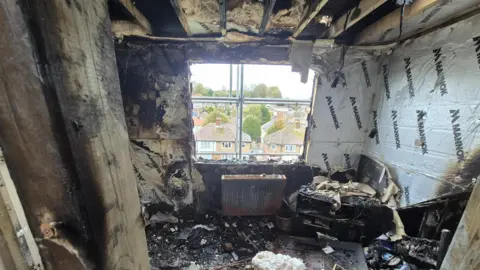
“At that point I called the fire brigade,” she remembers. They advised her to leave the property immediately. McConnell says the fire developed “very, very quickly”. While Kent Fire & Rescue Service battled the blaze for hours, the McConnell family home was left partially destroyed.
“Had I not have heard [the smoke alarm], I would have just been in there,” says McConnell. “They are essential, absolutely essential.”
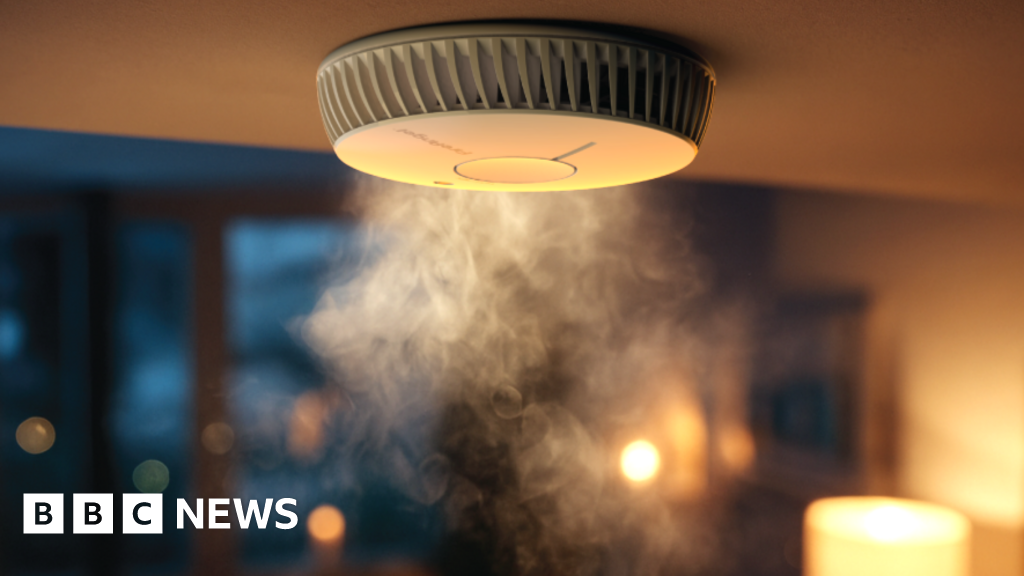
Smoke alarms have been around for many decades. The technology has barely changed in recent years – but is modern life slowly outpacing the capabilities of these life-saving devices
Detecting e-bike battery fires, for example, is particularly difficult, since these can unfold suddenly. Some researchers are working on new ways of sensing smoke and fire, perhaps even more quickly than before. But, take note: any certified, working smoke alarm is better than nothing.
“People are about 10 times more likely to die in a fire if there isn’t a working smoke alarm in the property,” says Suzanna Amberski, head of customer and building safety at Kent Fire & Rescue Service. Her organisation alone found roughly 6,500 expired smoke alarms in Kent properties between 2022 and 2024.
At a national level, a survey by insurer Direct Line published in December suggested that nearly four million UK adults might be living in a home without any smoke alarm at all. In the US, an estimated 16% of households do not have a functioning smoke alarm.

 Raman Chaggar
There are two main types of smoke alarm tech, says Raman Chagger, principal consultant at BRE, the Building Research Establishment. Ionisation-based systems use a tiny amount of radioactive material to charge, or ionise, particles in the air which flow between two small plates. Should smoke interrupt that flow of charged particles, the alarm goes off.
Optical-based smoke alarms use light instead. They are slightly better at detecting the large smoke particles created by slow, smouldering fires. When such particles enter a chamber in the device, they scatter light from a small light source, which is then picked up by a photoelectric sensor.
Heat sensors, often installed in kitchens to avoid false alarms if you simply happen to burn the toast, generally sound when temperatures climb above roughly 50C.
The tests used in standards for evaluating smoke alarms were developed back in the 1980s. However, despite changes in building materials since then, smoke alarms remain reliable, says Chagger: “They still respond to all the main fires we get today.”
And Chagger has personal experience of tumble dryer fires. Some years ago, a fire alarm went off in his own home – in a room where his tumble dryer was operating. “I couldn’t believe my ears,” he recalls but, on close inspection, he realised a thin layer of smoke was hovering beneath the ceiling above the machine. Chagger was able to deal with the fire safely and says he recommends putting a smoke alarm in the same room as a tumble dryer.
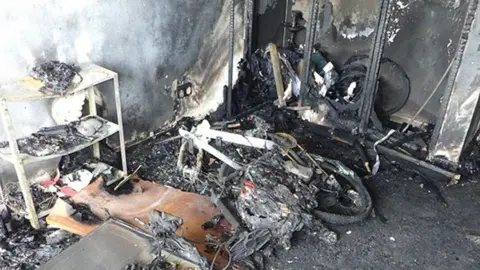
But e-bikes containing lithium-ion batteries are a newer challenge. “When a battery fails, it doesn’t necessarily ignite, it will often produce some off-gases,” says Stephen Welch, senior lecturer at the University of Edinburgh’s Fire Research Centre. “Those off-gases are toxic and flammable. If they accumulate, you can have an explosion risk.”
In experiments, Chagger has documented how lithium-ion battery fires develop. “It’s just incredible,” he says. “Nothing’s happening, then: outgassing and boom-boom-boom – all these explosions.”
 PA Media
Some smoke alarms have been designed to be ultra-sensitive. Aspirating devices, for example, constantly suck in air in order to detect even small quantities of smoke in a room. They are often used in commercial settings, including server rooms packed with expensive computer tech.
“A lot of stately homes will have that system,” says Niki Johnson, fire systems technical adviser for the UK Fire Association, a trade body, and owner of fire detection firm Derventio Fire and Security. “You could be looking at £3-4,000 just to do a corridor.” Such installations require substantial pipework, he explains.
 FireAngel
One of the biggest developments in the fire alarm space in recent years has been the rise of smart tech – wi-fi connected alarms that reach you by phone, for example, if they sense smoke while you are out.
“Our internet-connected devices use a proprietary radio system, which links the alarms together,” says Nick Rutter, co-founder and chief executive of FireAngel. The connected alarms can send push notifications to users’ phones via their home internet router.
He suggests that the smoke alarm industry has a responsibility to reduce nuisance alarms, which sometimes cause people to deactivate or uninstall the devices – a huge safety risk.
“If we’re producing technology our customers can’t live with, that’s our failing,” he says, explaining that FireAngel alarms have been calibrated to avoid making them overly sensitive, in order to reduce false alarms.
Another smoke alarm company, Kidde, has developed a subscription-based service that charges users in the US $5 (£3.71) per month for access to a fire monitoring service linked to the Ring doorbell app. “Trained agents can request emergency help and alert a customer’s emergency contacts in the event of an alarm,” explains Kidde on its website.
Isis Wu, its president of global residential fire & safety, adds, “In the case of a fire, it’ll send you an alert and it’ll ask you to confirm before you call out the fire department.”
The company also has a smart alarm that avoids alerting users to a low battery during the night, when they are likely to be asleep, since this often results in people disconnecting their alarm and forgetting about it.
Future smoke alarms might use very different tech. Researchers have developed an AI-based system that uses machine learning to detect fire in video feeds. The tool can spot fire and smoke in footage from “any camera”, says Prabodh Panindre at New York University – including CCTV, doorbell cameras and phone cameras.
“We monitor the size, shape and growth of the [fire],” he adds, explaining that this helps to avoid false alarms triggered by pictures of fires, or fires on a TV screen, that happen to be in shot.
Panindre and colleagues have even attached the detection system to drones, which could help firefighters faced with pinpointing a blaze in a high-rise building: “These drones can actually go around the building and capture the location of the fire.”
He says the team is now working to commercialise the technology.